
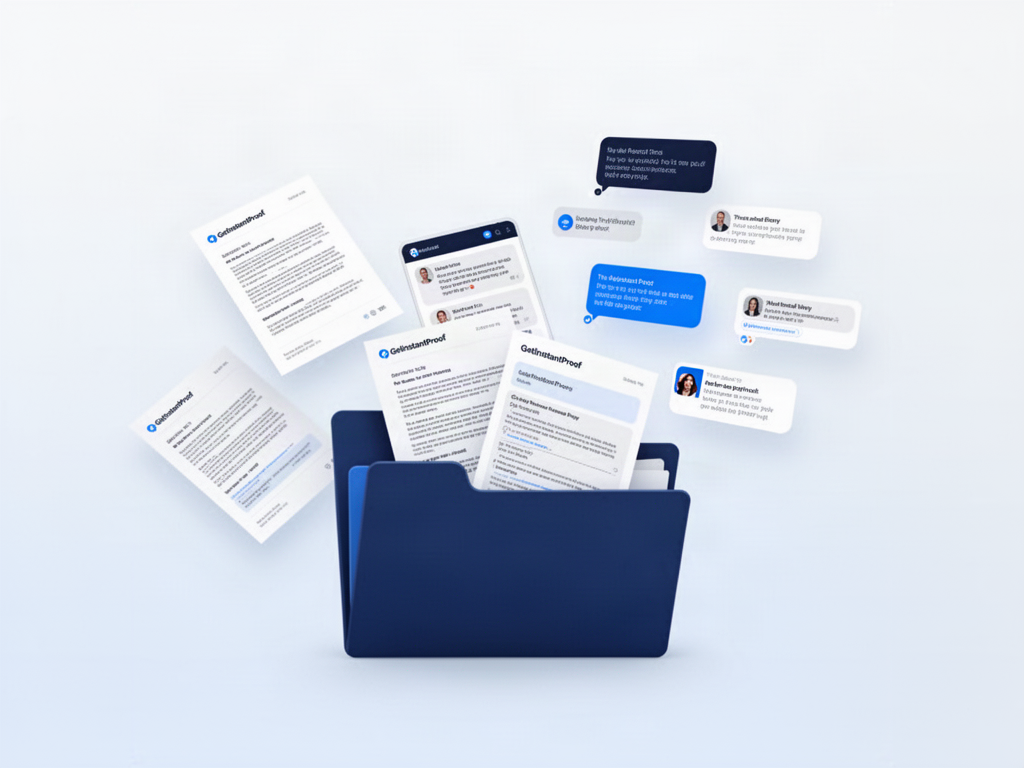
 1 · COLLECTSource records
Incident record
GetInstantProof guide
Start with what happened, when and where it happened, then preserve the records created closest to the event. Keep photographs, incident reports, witness details, medical records, work-impact records, expenses and insurer or other-party communications in date order. Separate facts you can prove from later recollection, and keep originals unchanged.
General information only — not legal advice · Reviewed 4 October 2026
Keep the originals, organise the important records, connect them to the events they support, then make missing information visible.
1 · COLLECTSource recordsIncident record
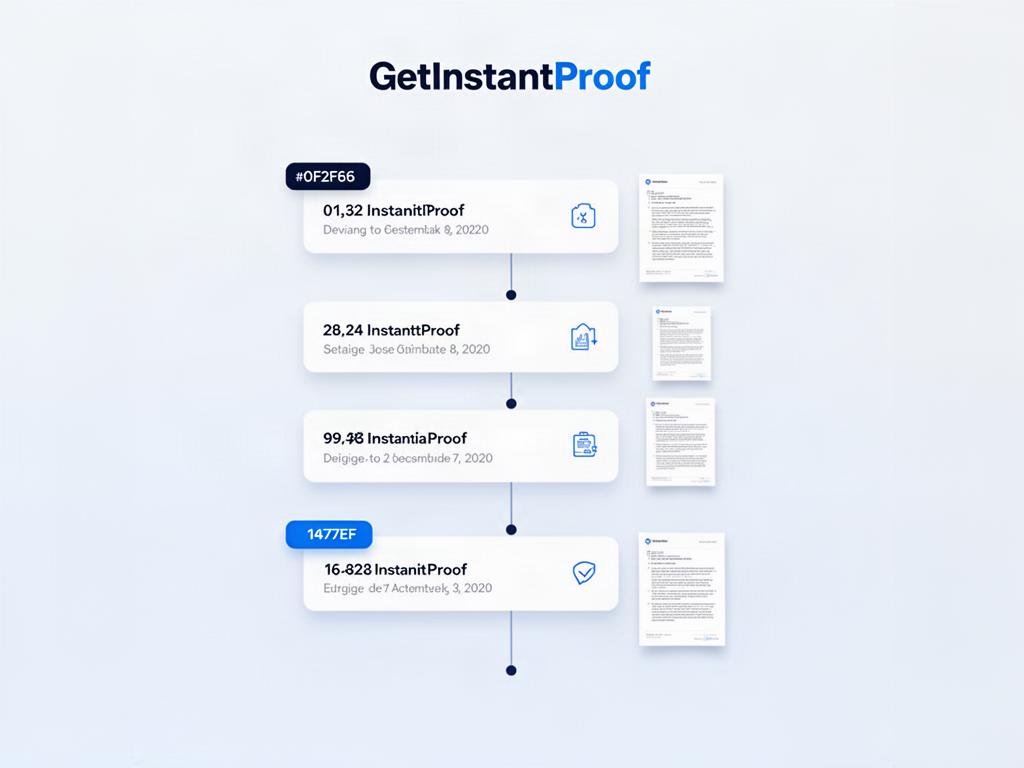 2 · ORGANISEChronology
Medical record
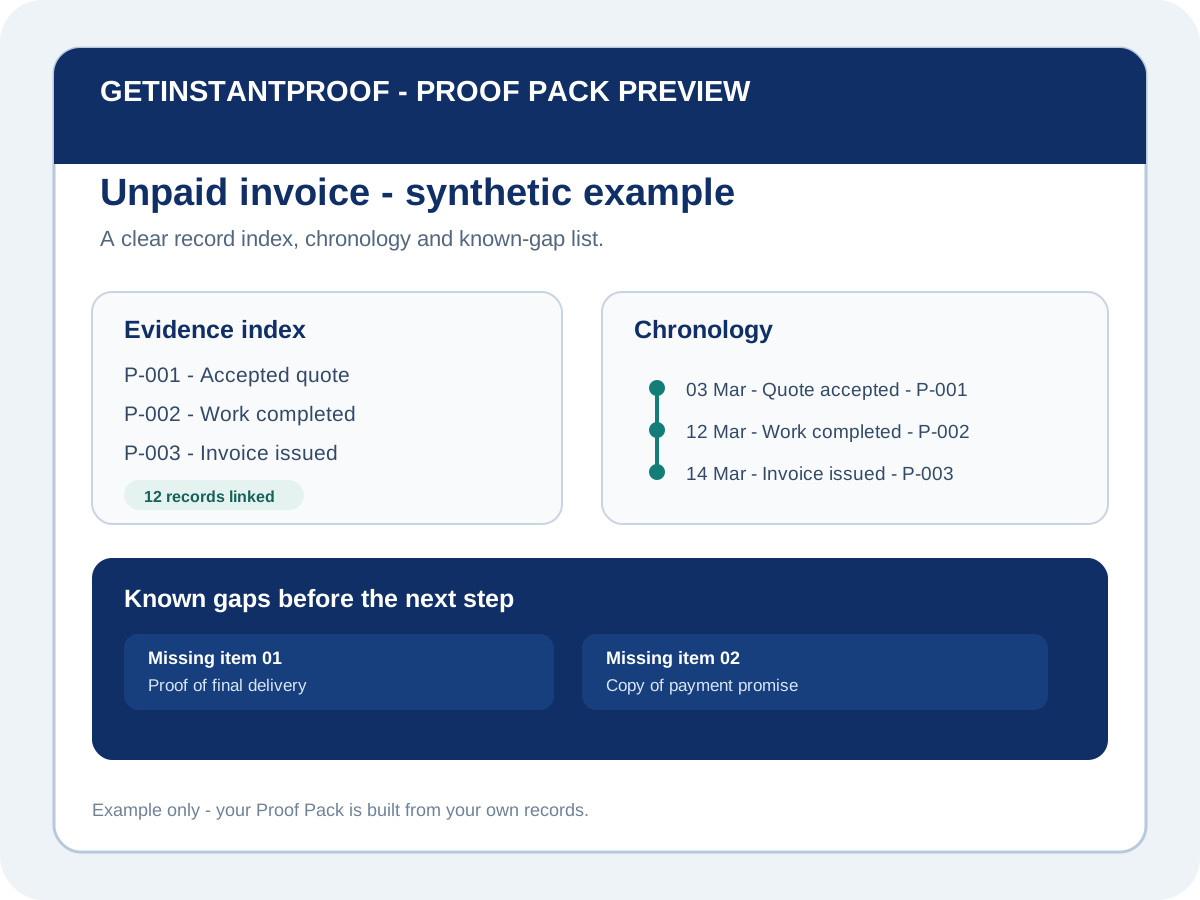 3 · PROOF PACKProof Pack
Loss and expense record
Keep attendance records, diagnoses, treatment plans, prescriptions, referrals and certificates. Do not alter medical documents or add conclusions that the record itself does not state.
Keep receipts, invoices, wage or leave records and other documents showing claimed financial effects. Record each item separately with its date and amount.
Preserve complete messages with an insurer, business, property occupier, employer or other party, including offers, denials and requests for information.
GetInstantProof organises customer-supplied records. It does not determine negligence, causation, damages, limitation periods or whether a claim should be made.
Continue the journey
Common questions